 Anmol Parimoo
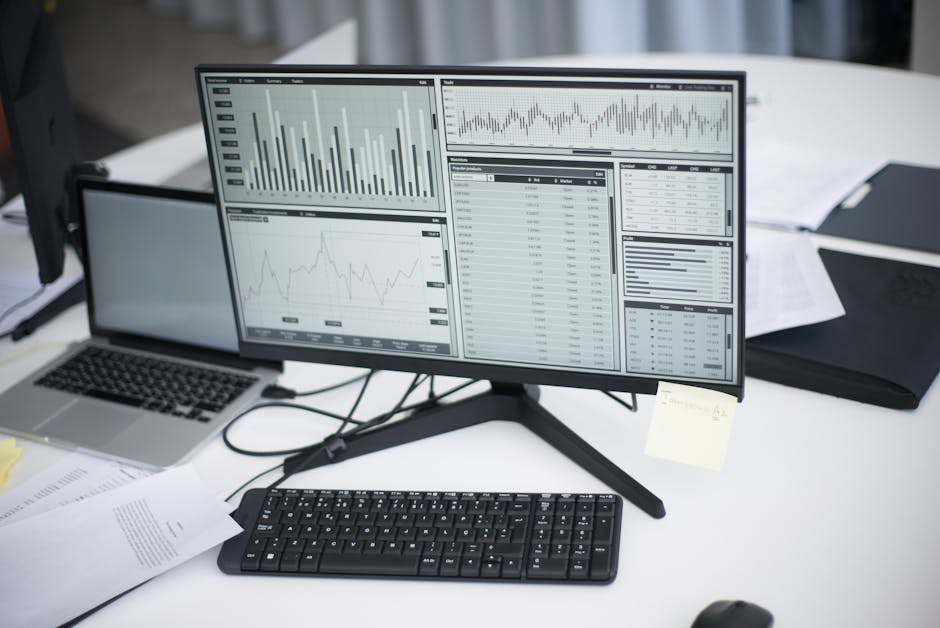
Every Monday morning, hundreds of startup founders sit down with a coffee and three browser tabs open: HubSpot, Stripe, and their Meta Ads Manager. They spend the next three hours copy-pasting numbers into a spreadsheet to see if they are actually growing. If you are doing this, you are likely wondering how much does it cost to automate reporting so you can get those three hours back.
In 2026, the answer generally falls between $5,000 and $15,000 for a robust, production-grade system that doesn't break every time an API updates. While you can find "automated" templates for $500, they often cost more in technical debt and maintenance than they save in time.
I have built these systems for dozens of Seed and Series A companies. In my experience, the cost of automation is an investment in your ability to make decisions based on reality rather than a feeling. This guide breaks down the actual market rates, the hidden costs of DIY, and why fixed-price models are becoming the standard for scaling startups.
How much does it cost to automate reporting for a startup?
For a typical startup with 20 to 100 employees, the cost to automate reporting ranges from $5,000 to $8,000 for a focused implementation sprint, or up to $20,000 for a custom enterprise data warehouse build. Most founders I work with find that a mid-range solution provides the best balance of reliability and speed.
Automating your reporting is not just about connecting two apps; it is about building a pipeline that cleans, transforms, and visualizes data. The cost is driven by three main components: software subscriptions, labor (your time or a pro's time), and ongoing maintenance.
| Approach | Typical Price Range | Time to Value | Best For |
|---|---|---|---|
| DIY (No-Code) | $100 - $500/mo (SaaS) | 4-6 Weeks | Pre-seed founders with time to spare |
| Freelancer (Upwork) | $1,500 - $4,000 | 3-5 Weeks | Simple, single-source connections |
| MLDeep Automation Sprint | $5,000 - $8,000 | 1-2 Weeks | Series A founders who need it "done right" |
| Full Data Foundation | $15,000 - $50,000 | 2-3 Months | Mid-market companies with complex data |
What are the main drivers of business automation cost 2026?
The "sticker price" of an automation project depends heavily on your current data mess. When I scope a project for a founder, I look at four specific levers that drive the business automation cost 2026 up or down.
1. Data Source Complexity
Connecting to a standard SaaS tool like HubSpot via a native integration is cheap. However, if you need to pull data from a legacy SQL database, an undocumented API, or worse, a set of disparate CSVs that your sales team manually updates, the price increases. The more "pre-processing" required to make the data usable, the more engineering hours are billed.
2. Transformation Logic
Most people think reporting is just "moving data from A to B." In reality, the value is in the transformation. For example, if you need to join Stripe billing data with HubSpot lead sources to calculate Customer Acquisition Cost (CAC) by channel, that requires a logic layer. We often use tools like dbt (data build tool) or n8n to handle this, and setting up these models accounts for roughly 40% of the total project cost.
3. Output Requirements
Are you looking for a simple Slack notification every morning? Or do you need a high-fidelity Looker Studio dashboard that the Board of Directors will see? The complexity of the visualization layer impacts the final price. High-quality dashboarding involves UI/UX design to ensure the data is actually interpretable, not just a wall of charts.
4. Data Quality and Cleaning
If your CRM is a "garbage in, garbage out" situation with duplicate records and missing fields, the automation will fail. A significant portion of the cost in 2026 is often "data hygiene"--writing scripts to deduplicate records and enforce data schemas before they ever reach your report.
Why automated reporting pricing small business owners see varies so much?
If you search for "reporting automation" on a marketplace like Upwork, you will see bids for $500. If you call a Big 4 consulting firm, they will quote you $100,000. This variance exists because the term "automation" is used loosely.
A $500 freelancer is usually setting up a "Zap" that triggers when a new row is added to a sheet. This is fragile. If the Zap fails, or the spreadsheet column name changes, your report breaks. You then spend your Sunday night trying to find where the error happened.
The automated reporting pricing small business leaders should actually look for is the "Production-Grade" tier. This includes:
- Error Handling: What happens when an API is down? The system should retries and alert you.
- Data Validation: Checking if a revenue number is a negative value before it hits the dashboard.
- Documentation: A map of how the data flows so you aren't locked into a single developer forever.
At MLDeep, I focus on the Automation Sprint. I have found that by standardizing the tech stack--using n8n for workflows and BigQuery for storage--I can deliver a system that usually costs $15,000 for just $5,000 to $8,000. It is a fixed-price, 1-2 week engagement that avoids the "infinite hourly billing" trap.
Drowning in spreadsheets?
Get a free 30-minute workflow teardown. We'll show you what to automate first.
Book Free TeardownWhen should I stop using spreadsheets and automate my reporting?
I tell my clients to follow the "Monday Morning Rule." If you spend more than 90 minutes every Monday manually pulling data, you are losing money.
Let's do the math. If a founder's time is worth $200/hour (a conservative estimate for a venture-backed founder), and they spend 3 hours a week on manual reporting, that is $600/week in lost productivity. Over a year, that is $31,200.
Investing $8,000 once to eliminate that task has a payback period of less than four months. Beyond the direct cost, the real value is in the "Unblock." When a founder has a dashboard that updates in real-time, they stop guessing which marketing channel is working. They can double down on what works on Tuesday, rather than waiting until next Monday to realize they wasted $5,000 on bad ads.
If your team is starting to feel the weight of "manual data toil," the Spreadsheet Escape Plan is a great way to map out exactly which parts of your process are ripe for automation before you write a single line of code.
How to choose between a freelancer and an automation agency?
Choosing the right partner is just as important as the price. I often see founders get burned by choosing the cheapest option. Here is how I distinguish between the different levels of service in the market.
The Freelancer Model
Best for: "I need this one specific Google Sheet to sync with this one Slack channel." Pros: Lowest upfront cost. Cons: High risk of "spaghetti code." Documentation is usually non-existent. When they stop answering their emails, you are stuck with a broken system you don't understand.
The Agency Model
Best for: "We have a $20M ARR business and need a full data warehouse and an internal analytics team." Pros: Highly professional, multi-disciplinary teams. Cons: Very expensive ($20k+ minimums). Long discovery phases that can take months before you see a single chart.
The Sprint Model (The MLDeep Approach)
Best for: "I am a Seed/Series A founder who needs a professional system now, without the agency overhead." Pros: Fixed price ($5,000 - $8,000). Fast delivery (1-2 weeks). I use a proven "Gold Stack" of tools that scales with you. Cons: Limited scope. We focus on your most critical 1-3 reports rather than trying to automate your entire company at once.
What is the typical tech stack for automated reporting in 2026?
The cost is also influenced by the tools used. In 2026, the "modern data stack" has become accessible to small businesses. We no longer need six-figure Snowflake contracts to get the job done.
- Ingestion (The "Mover"): Tools like n8n or Fivetran. n8n is my preferred tool for startups because it is incredibly flexible and has a much lower cost-per-execution than Zapier.
- Storage (The "Brain"): Google BigQuery. It is essentially free for small startups (the first 10GB of storage and 1TB of queries per month are free).
- Transformation (The "Cleaner"): SQL or dbt. This is where we write the rules that define your metrics (e.g., "Monthly Recurring Revenue equals all active subscriptions minus discounts").
- Visualization (The "Face"): Looker Studio or Evidence.dev. These allow us to build interactive dashboards that your team can actually use.
When I build an Automation Sprint, I set up this entire pipeline for you. You own the accounts, you own the code, and you aren't tied to a proprietary platform.
Frequently Asked Questions About Reporting Automation
Can I automate my reporting for free?
You can get close by using native "Google Sheets" connectors for tools like HubSpot or Stripe. However, these are often limited in how much data they can pull and require manual refreshes. They also don't handle "joining" data from different sources well. While the software might be free, the hours you spend fixing broken connections will cost you more than a professional setup.
How long does it take to build an automated reporting pipeline?
A basic connection can be done in a few hours. A production-grade system that cleans your data and builds a custom dashboard typically takes 1 to 2 weeks of focused work. At MLDeep, I cap my sprints at two weeks to ensure founders get value quickly rather than waiting months for a "perfect" system.
How much should I budget for monthly software fees?
For a startup, your "data stack" software should cost between $50 and $200 per month. This usually covers an n8n subscription, a small BigQuery bill, and a dashboarding tool. This is a fraction of the cost of hiring even a junior data analyst.
Will I still need to know SQL or Python to maintain this?
If the system is built correctly, no. I build systems so that founders can interact with the final dashboard without ever touching code. I provide a "runbook" so that if you eventually hire a data person, they can take over the SQL models and expand them easily.
What is the ROI of spending $8,000 on reporting?
The ROI comes from two places: time saved and "leverage." If automating your reports saves you 10 hours a month, the system pays for itself in less than a year. The "leverage" comes from making better decisions--spotting a drop in conversion rates on Tuesday instead of Friday can save you thousands in wasted ad spend.
Ready to stop manual reporting?
If you are tired of spending your Mondays in spreadsheets, I can help you build a reporting system that actually works. I specialize in taking founders from "data mess" to "data clarity" in just one week.
I build these workflows as fixed-price Automation Sprints -- one workflow, one week, $5,000 to $8,000.
Want to talk through what you should automate first? Book a free 30-minute call and we can look at your current spreadsheet setup together.